
A thesis you can argue with: the unforgiven functionary
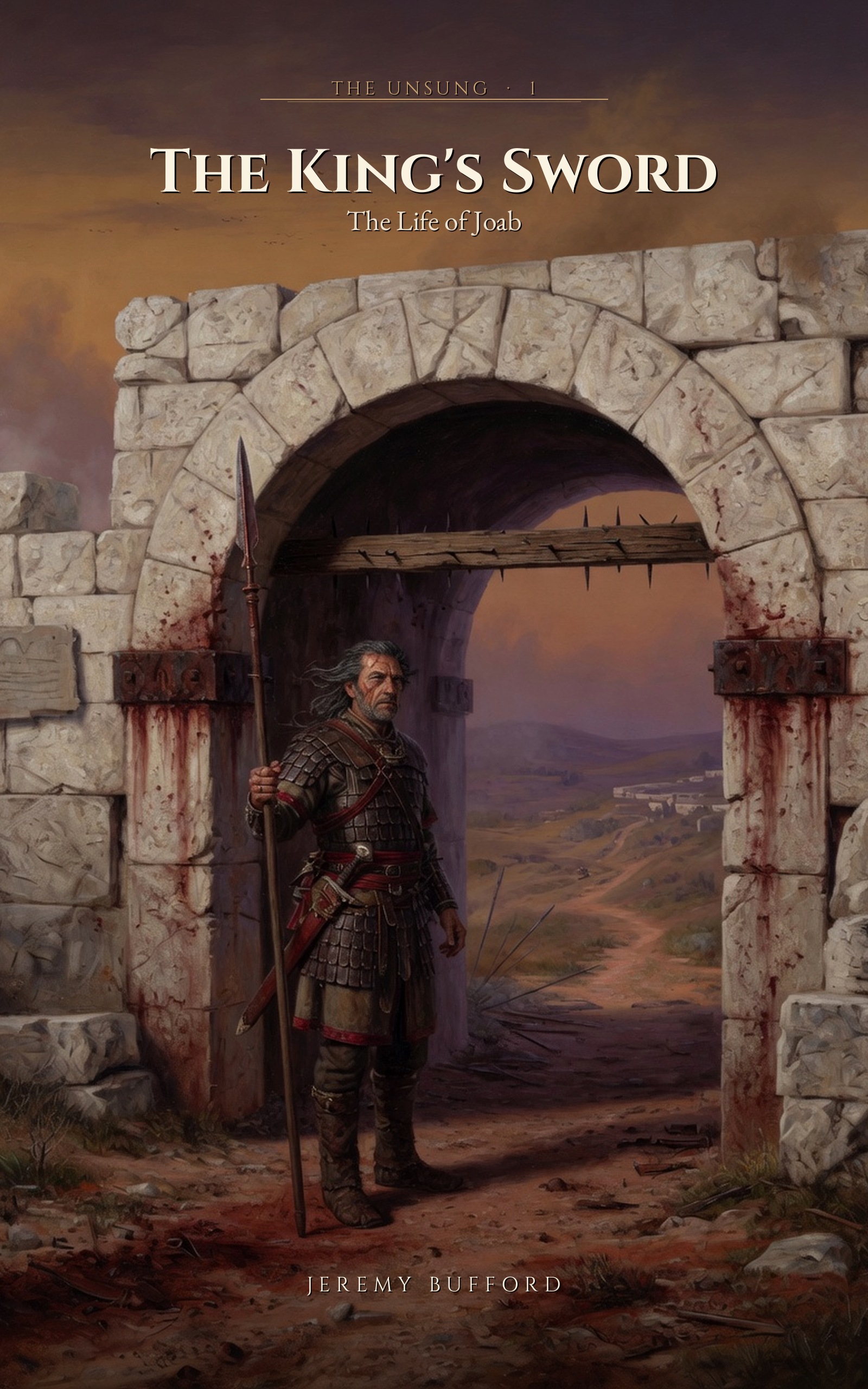
Not a big-idea airport book. A biographical novel whose claim is sharp: kingdoms keep men they will not forgive.
Editorial reading note from the Backlinker Reader Desk. This is not an Amazon customer review. Personas are composite Kindle-reader voices, not real purchasers, and nothing here is a verified purchase, star rating, or endorsement for Amazon.
I do not usually buy biblical fiction. I bought this because the claim is an institution claim: a state is held by people too hard for its sovereign, and those people are discarded when the peace arrives. That is closer to my shelf than to Sunday school.
Bufford’s Joab is a function. Wars, rivals the kingdom cannot absorb, the returned prince, the tree, the rebuke, the wrong heir, the altar. The novel does not decorate the thesis with TED examples. It runs one life until the thesis has nowhere to hide.
As argument
Loyalty without tenderness is the method. Competence without permission is the crime the next court names. Blood as policy is the thing the king needs in the room and cannot have in the chronicle. I argued with the book in the margins: is Joab spent by peace, or by a bad bet on Adonijah? Both. The novel is adult enough to let both stand.
If you want sociology of waiting or the paperwork of power, this is not those manuscripts. It is a worked example. I prefer worked examples. Book One of The Unsung: I will keep it next to the nonfiction, which is a strange sentence I mean.
Where I put it on the shelf
I put The King’s Sword with the worked examples, not with the airport sociology. One life, run to the end, thesis visible: the unforgiven functionary. Joab is the function. The altar is the decommission.
I still want the ideas books when they exist as books. This is not those. It is cleaner than those, in a way: no prophet-author, no empty categories. A commander, a tree, a wrong heir, a pair of horns. I can argue with that. I did.
I keep saying worked example. Here is the example in one line: Joab is required, then unforgiven. The King’s Sword does not enlarge that into a theory of states. It just runs the life until the horns. I prefer that to a glossary of institutions with no blood in it. That is the whole of my note on Joab: one function, run until it is spent.